 English
 中文
中文


Honghe L20 meets your expectations for desktop particle counters
Click:
Time:2022-11-17 00:00:00
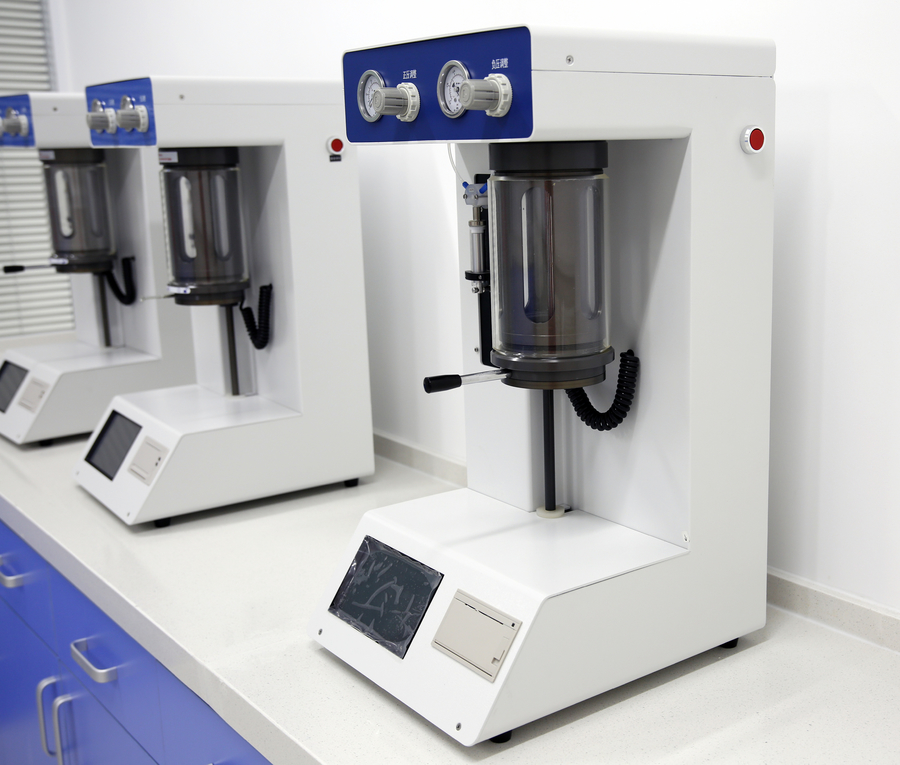
Main features of desktop computers
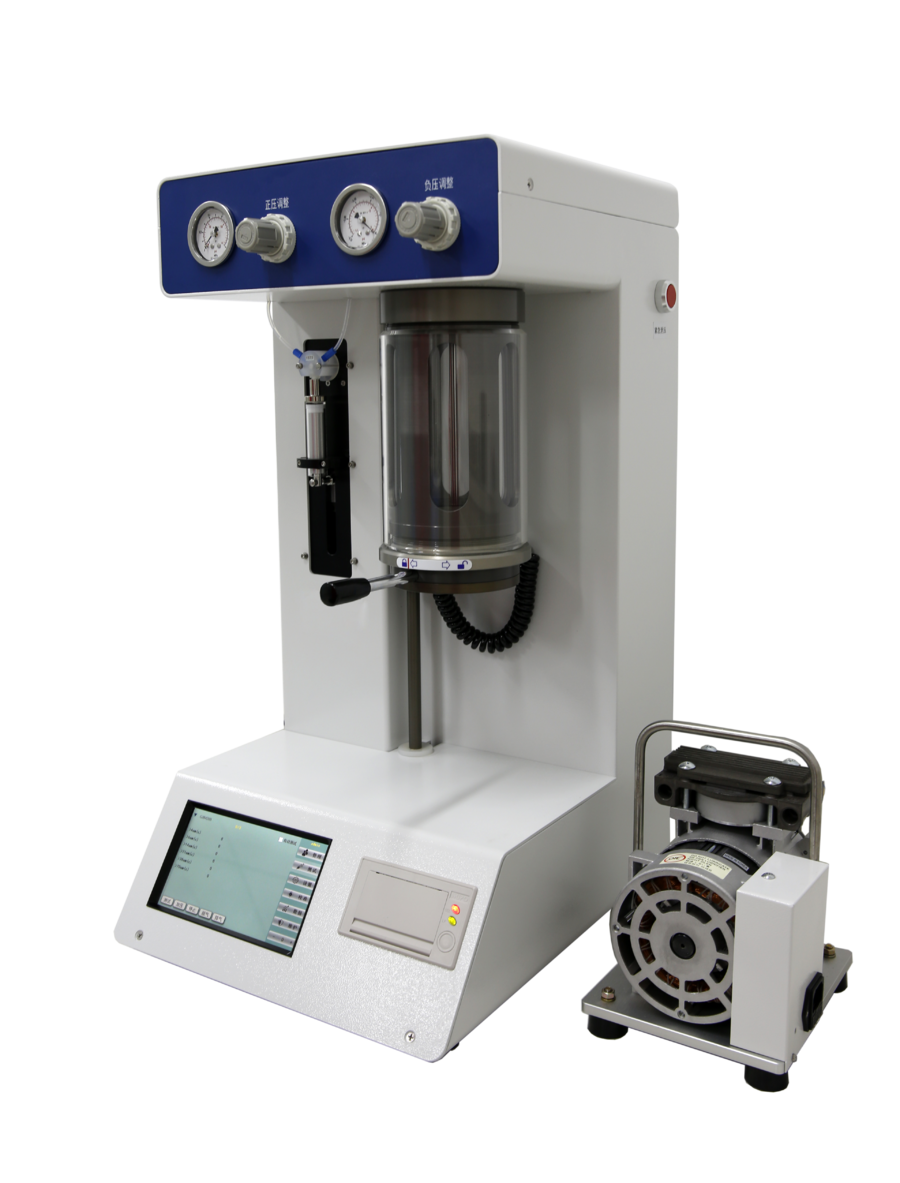
The injection system combining positive and negative pressure can achieve sample degassing and is suitable for testing samples with different viscosities (the viscosity of the detected sample can reach 650cSt, and if the viscosity is too high, it can be detected by heating or dilution methods);
Built in pressure sensor that can set pressure values and automatically determine the pressure inside the cabin to ensure safety;
The pressure chamber adopts a three-layer design, with an inner layer of tempered glass, a main stainless steel frame, and an outer protective cover, which facilitates the observation of the liquid sample status by the testing personnel and ensures absolute safety during the testing process;
Built in air purification system (including micro mist separator, oil mist separator, moisture filter) to ensure that testing is not contaminated; Higher integration, minimizing instrument weight and reducing the burden on external air pumps;
There is an observation window behind the instrument, which facilitates the detection personnel to observe the status of the air purification system;
Built in more than ten commonly used standards, including GJB-420A, GJB-420B, NAS1638, GB/T14039, ISO4406, SAE4059CPC, SAE4059F, SAE749D, Г OCT17216, QC/T29104, JB/T9737, DLT432, HH005-2018, etc., can provide data results for all built-in standards in one test; Standard customization and addition work can be carried out, and custom standard names can be modified;
According to customer requirements, 8-64 custom channels can be selected, and particle size can be set arbitrarily;
It can perform cleaning detection, pre-set target cleaning requirements particle concentration, display in real-time and automatically stop cleaning when the requirements are met, visually display the cleaning status, save cleaning agents, and improve cleaning efficiency.
Precision manufacturing ensures high accuracy in testing
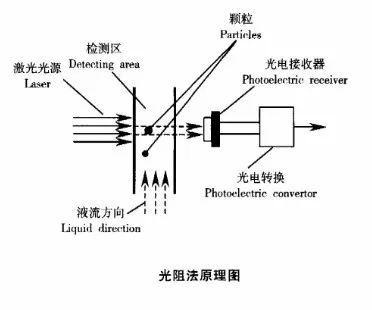
As shown in the diagram, the injector must ensure that a certain volume of liquid sample passes through the particle sensor at the specified flow rate during testing. The particle sensor converts the particle signal flowing through the window into an electrical signal. The counting display system amplifies and calculates the electrical signal collected by the sensor, converts it into information about particle size and quantity, and outputs it through display. After briefly understanding the working principle of particle counters, let's take a look at which parameters have a direct correlation and impact on the accuracy of testing.
In general, when testing the solid particle contamination level in oil, the actual sampling volume is often very small, and the vast majority of solid particle contamination levels are classified based on the number of particles per 100mL of liquid. Therefore, if the sampling volume is inaccurate, the testing error is often amplified when determining the solid particle contamination level.
The Honghe desktop computer adopts a high-pressure injection pump sampling method, which can set the sampling volume by itself, with stable injection speed and high sampling accuracy (sampling accuracy better than ± 0.5%)
If multiple particles appear simultaneously in the sensor, there may be a situation where the particles overlap/stack with each other, which can cause counting errors. The higher the limit value, the better the instrument performance.
LPC-L20 coincidence error limit: 12000~40000 particles/ml
The resolution determines the accuracy of particle size detection by a particle counter. For the fluid pollution control industry, the particle shapes we measure are irregular, and the excellent resolution of the technology can actually make the response curve of the sensor too dense, and even mistake one particle for several particles, resulting in false counting of irregularly shaped particles.
The resolution of Honghe particle counter is better than 10%
The particle counter converts the projected area of particles into pulse voltage for testing, so there is a strict one-to-one correspondence between the projected diameter of particles and the corresponding pulse voltage amplitude, which is the calibration curve of the sensor.
For the uniform particle size on the calibration curve, the corresponding threshold values obtained are also different due to the different calibration methods used, and there is generally no fixed proportional relationship between these calibration curves, so they cannot be converted to each other. Therefore, when using a calibration curve, it is important to determine which calibration curve should be used.
The Honghe particle counter is equipped with multiple calibration curves, which are compatible with all commonly used domestic and international standards for calibration; It can perform single channel and multi-channel calibration to achieve automatic calibration function.
Fully functional automatic color touch screen operation, supporting both Chinese and English interfaces, easy and convenient to operate;
Various sampling containers such as standard sampling bottles or cups can be used to meet the testing requirements of different industries;
It has massive data storage and printing functions, can store 1000 sets of data, and supports USB storage of data;
Equipped with RS232 interface, it can be connected to a computer or laboratory platform for data processing;
Optional viscosity, moisture, and temperature sensor modules provide viscosity, moisture saturation, ppm values, and temperature reference values while accurately testing particle distribution.
Prev : Honghe Portable Wind resistant Moving Forward, "Sensitive" More IntelligentNext : Let you learn about the differences of Honghe L3 in 2 minutes
文章推荐
友情链接:
Tianjin Honghe Technology Co., Ltd
E-mail:sales01@tjhonghe.com
I would like to call the information hotline:
Tel 022-58956940
Add: 5F, Block C-D, Building 3, No.13 Ziyuan Road, Huayuan Industrial Park, Tianjin
Scan QR code Follow us:

Copyright ©2022 Tianjin Honghe Technology Co., LTD.All Rights Reserved ICP record No. 19008642 -1
\©2022 Tianjin Honghe Technology Co., LTD. All Rights reserved
ICP备案号津ICP备19008642号-1
 客服1
客服1

