 English
 中文
中文


Are there any doubts about the particle counting results? Learn some simple methods for self inspection and handling
Click:
Time:2021-08-27 00:00:00

Although the particle counter is a precision electronic instrument, its failure rate is still very low during normal use. Some problems encountered during use are often "soft faults" that can be easily resolved to work properly. Therefore, mastering some simple troubleshooting methods can achieve twice the result with half the effort.

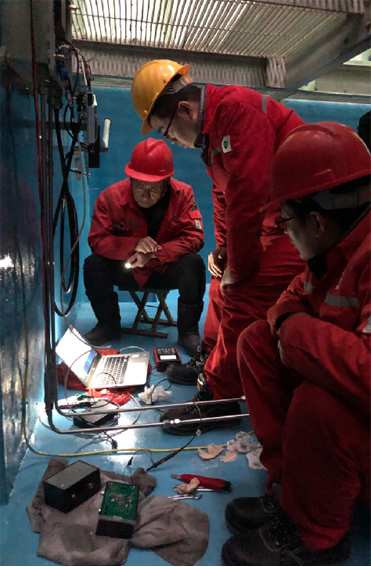

Simple counting fault inspection method

1
Differential counting is significantly abnormal
In the detection results, if the number of particles in the middle channel is close to or exceeds the number of channels with small particle sizes in front, it should be suspected that there is water in the liquid sample first.
When the water in the oil sample is completely dissolved in the oil, the moisture in the oil sample will not cause counting errors; But when the water content exceeds the saturation limit of the oil sample, the water in the oil sample will appear in a free state, leading to counting errors. When it is suspected that the oil sample contains moisture, a small amount of clean isopropanol can be added to the oil sample, and then placed in an oven at (100-110) ℃ for 30 minutes. After the moisture evaporates, testing can be carried out. Special attention should be paid to preventing secondary contamination during the processing of oil samples.
2
Increased counting of large particles
The presence of bubbles in the liquid sample will cause an increase and abnormality in the detection results of large-sized particles. Generally, if there is a significant increase and abnormality in particles larger than 100 μ m in the detection results, the presence of bubbles in the liquid sample should be suspected first. In this case, the liquid sample can be shaken evenly and placed in an ultrasonic cleaning machine for about 30 seconds until tiny bubbles rise to the surface of the liquid sample for exhaust before testing.
3
There are many large particles that cannot be cleaned thoroughly after repeated cleaning
After eliminating the influence of water and bubbles, the desktop computer should first check whether the sensor is blocked, and the portable computer should first check whether there is a sensor protection filter element in the liquid flow pipeline. If there is, it should be removed for inspection and cleaned with ultrasonic waves.
4
Poor repeatability, with more and less detection data at different times
Firstly, it should be suspected that there is an oil film formed after the residual liquid dries up in the sensor window. The sensor window can be soaked in a mixture of isopropanol and petroleum ether for a long time, and then cleaned with a soft bristled brush.
5
There are numerous small particles and very few large particles
When detecting clean liquids, there is a phenomenon where there are extremely many small particles and very few large particles in the detection results, especially when the threshold setting of the first channel is close to the threshold noise level. After repeated flushing, it is still ineffective. The first thing to suspect is whether there is electrical interference or nearby large equipment causing electromagnetic interference.
After the instrument encounters a problem, the first step should be to confirm whether it is a functional malfunction, check whether there is a problem with the settings, and whether the calibration curve and threshold are correct. If it is a functional disorder, simple problems can be handled by oneself, and complex faults are still recommended to contact the manufacturer.
Prev : Three common pollutants in lubricating oil and their detection methodsNext : Do you want accurate test results? Liquid sample pretreatment is also important
文章推荐
友情链接:
Tianjin Honghe Technology Co., Ltd
E-mail:sales01@tjhonghe.com
I would like to call the information hotline:
Tel 022-58956940
Add: 5F, Block C-D, Building 3, No.13 Ziyuan Road, Huayuan Industrial Park, Tianjin
Scan QR code Follow us:

Copyright ©2022 Tianjin Honghe Technology Co., LTD.All Rights Reserved ICP record No. 19008642 -1
\©2022 Tianjin Honghe Technology Co., LTD. All Rights reserved
ICP备案号津ICP备19008642号-1
 客服1
客服1

