 English
 中文
中文


The hazards of particulate pollutants: sedimentation and stagnation
Click:
Time:2021-07-23 00:00:00
The solid particle pollutants in oil are the main cause of wear, which interact with the surface of components for a long time, resulting in various forms of wear, gradually damaging the surface of components, increasing the clearance between fittings, and increasing internal leakage, leading to performance degradation and even failure, shortening the service life; At the same time, it can promote particle sedimentation, jamming, and blockage, leading to sudden failures.
In this issue, we will continue to discuss the causes and potential hazards of sedimentation, blockage, and other issues.
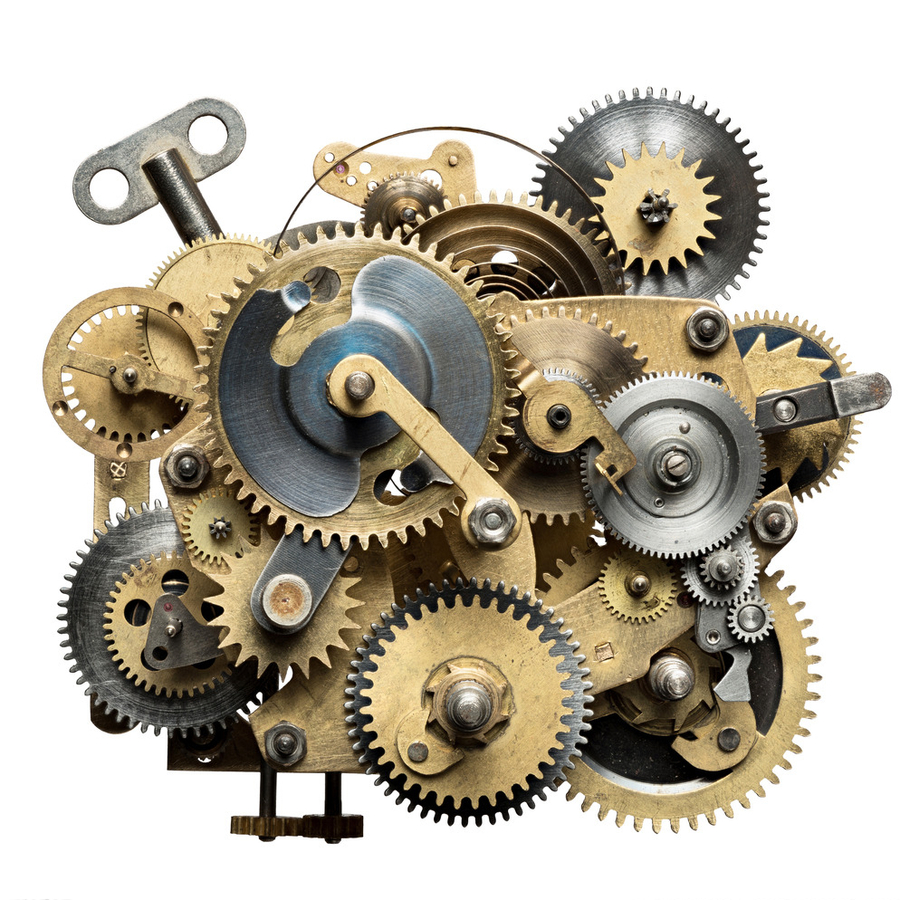
Sedimentation
When solid particles flow through a moving pair (a moving pair is an active connection between two components that directly contact and can produce relative motion), under the additional effect of gap flow, particles with a particle size smaller than the fitting gap are more likely to enter the gap and accumulate in the gap under the adsorption and blockage of the oil film boundary layer. As the accumulation increases, the gap flow may be blocked by a large number of small particles, which is the phenomenon of sedimentation. Particle accumulation can greatly increase the static friction between the moving pairs, hinder the movement of the valve core, and lead to sudden failures such as unstable operation, such as air drifting, unstable oil pressure, pressure jumping, and instantaneous slow or stagnant response; At the same time, it can promote wear, blockage, and jamming. The phenomenon of sedimentation is often temporary. Once the motion pair starts working, the originally formed boundary layer is destroyed, and the accumulated particles are quickly carried away by the fluid. The sedimentation effect disappears, and the slide valve can work normally again. Therefore, sudden unstable faults can automatically disappear, and the system can resume normal operation (often unable to be checked after ground shutdown). The higher the concentration of small particles in oil, the longer the relative static time of the moving pair, and the more likely it is for sedimentation to occur.
Stuck
Stagnation usually occurs on the mating surface between the spool and valve sleeve of the slide valve mechanism, causing scratches and abrasions on the mating surface, hindering the movement of the spool, or even causing it to jam, resulting in sudden failures.
The hydraulic clamping phenomenon caused by particles can cause jamming. Larger particles enter the gap of the motion pair and attach near the entrance of the gap. As the flow velocity increases, the pressure distribution decreases, and a radial unbalanced force is generated in the upper and lower gaps, pushing the valve core towards the side with higher particle concentration, resulting in hydraulic clamping caused by particles. In high-pressure systems, when hydraulic clamping occurs, the valve core is subjected to significant unbalanced forces and hydraulic clamping forces, resulting in valve core jamming and eccentric wear.
Elastic deformation clamping phenomenon can also cause jamming. Under high pressure, the elastic deformation of the material causes an increase in the clearance between the moving pair, resulting in some particles slightly larger than the normal clearance merging and remaining in the clearance. When the system is depressurized or the oil pressure is reversed, the original elastic deformation disappears, and the large particles are pressed in the clearance. If the particle hardness is high, the particles are embedded in the surface of the moving pair, which is called elastic deformation clamping. When elastic deformation occurs, it can cause compression damage and severe jamming on the mating surface. Severe jamming can result in obvious scratches or even jamming.
The rolling and compaction of irregular large particles can also cause jamming. The particle shape is usually irregular. Some flat and long particles have a length greater than the gap value, but a flat thickness smaller than the gap value. The flat end can enter the gap of the moving pair, and the particles roll under the rolling of the moving surface. The long end stands in the gap, causing jamming.
Blocking
Blockage usually occurs at throttle holes, damping holes, nozzles, and oil filters, causing a decrease in flow and unexpected malfunctions.
Accelerate oil deterioration
The irregular movement of large particles can repeatedly shear the oil, reducing its viscosity and lubricity, catalyzing its oxidation and deterioration, and shortening its service life.
Prev : The Harm of Particle Pollutants: Wear and tearNext : 8 common misconceptions about mechanical equipment lubrication
文章推荐
友情链接:
Tianjin Honghe Technology Co., Ltd
E-mail:sales01@tjhonghe.com
I would like to call the information hotline:
Tel 022-58956940
Add: 5F, Block C-D, Building 3, No.13 Ziyuan Road, Huayuan Industrial Park, Tianjin
Scan QR code Follow us:

Copyright ©2022 Tianjin Honghe Technology Co., LTD.All Rights Reserved ICP record No. 19008642 -1
\©2022 Tianjin Honghe Technology Co., LTD. All Rights reserved
ICP备案号津ICP备19008642号-1
 客服1
客服1

