 English
 中文
中文


The Harm of Particle Pollutants: Wear and tear
Click:
Time:2021-07-16 00:00:00
Wear and tear is a common and serious problem in machine operation, and is the main cause of component failure in hydraulic and lubrication systems. The solid particle pollutants in oil are the main cause of wear, which interact with the surface of components for a long time, resulting in various forms of wear, gradually damaging the surface of components, increasing the clearance between fittings, and increasing internal leakage, leading to performance degradation and even failure, shortening the service life; At the same time, it can promote particle sedimentation, blockage, and jamming, leading to sudden failures.
In hydraulic systems, both metal and non-metal components are highly susceptible to this type of wear, especially when paired with high-precision slide valve or plunger structures, which are more susceptible to particle wear. The process of wear is quite complex, it is a microscopic and gradual process, and generally the process of wear cannot be seen, only the results of wear can be seen. The wear caused by particle pollution mainly includes several mechanisms such as cutting, fatigue, adhesion, and erosion.
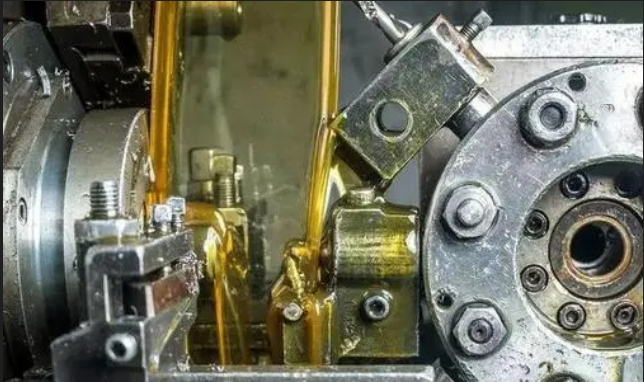
Cutting wear
The hard solid particles that enter the gap between the moving pairs of components are embedded on the surface of the softer component, and in relative motion, they cut off the material on the surface of another component like a turning tool. The microstructure of the generated debris is generally similar to that of cutting debris on a lathe. This type of wear is often more severe on harder surfaces due to the embedding of particles on softer surfaces. Cutting wear surfaces often have obvious patterns and scratches.
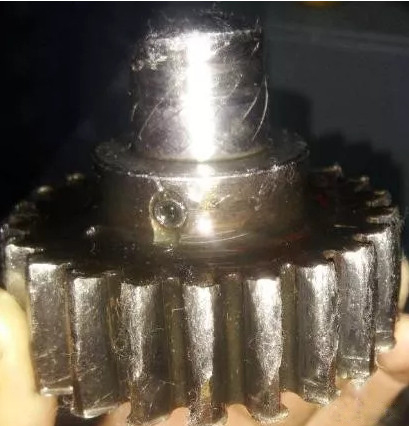
Fatigue wear
After solid particles enter the gap of the motion pair, the surface of the component is plowed out of the groove (plastic deformation) and stress is generated under rolling and compaction; Then, initial cracks appear on the surface; Repeated action causes crack propagation and the formation of voids; Finally, the surface material peeled off and was damaged. According to the location of the initial crack that causes fatigue spalling, surface fatigue wear can be divided into two categories: pitting and spalling——
Pitting corrosion: The characteristic of pitting corrosion is that initial cracks appear on the surface of the part, and the surface cracks gradually propagate and produce fatigue failure. The depth of material damage is shallow, with small pieces resembling beetles falling off, and finally forming small pits on the surface of the parts.
Peeling off: When the surface contact compressive stress is high and the friction coefficient is low, the initial cracks often initiate and propagate below the surface, and fatigue failure mostly occurs suddenly. The material falls off in a sheet-like form with a large damage area. This form of fatigue wear is called peeling off. This form of surface fatigue wear often occurs in general rolling bearings, and the damage sites are mostly on the raceway and rolling element surfaces of the inner and outer rings of the bearing.

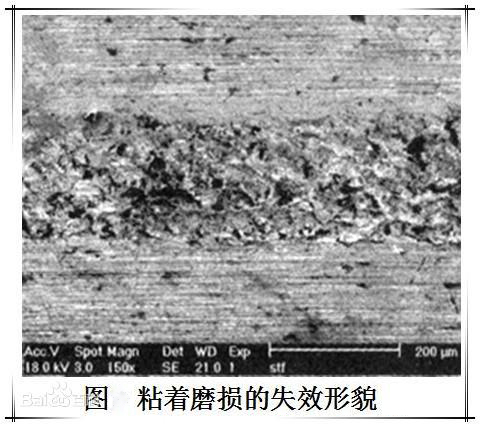
Adhesive wear
The interaction between solid particles and the surface of the component causes plastic deformation of the surface material, resulting in protrusions and pits. These protrusions disrupt lubrication, causing direct metal to metal contact on the surface of the moving pair. Under load, the contact point causes local high temperature and fusion adhesion. When the side effects of motion are sheared relative to motion, the material peels off from surfaces with lower yield strength to form abrasive particles, further exacerbating wear. This is a vicious cycle of adhesion shear re adhesion shear, known as adhesive wear. When there are many fusion points, the movement may experience jamming or even freezing, leading to sudden failures.
Erosion
Solid particles, with the high-speed flow of liquid, continuously spray and wash the edges and surfaces of components exposed in the flow channel, like "blowing sand" or "shot blasting". Under such long-term repeated action, the eroded parts can be worn, which is called erosion wear. The oil flow rate and velocity of modern aircraft hydraulic systems are very high. The flow rate of hydraulic oil in pipelines can generally reach 5-7 m/s, and in some areas, it can reach more than ten meters per second. At such high speeds, particles have enough energy to damage the metal surface being impacted. Generally speaking, softer particles cause deformation of the metal material at the impact site, resulting in defects beneath the surface and subsequent damage, similar to accelerated fatigue failure; Hard particles cause misalignment, slip, accelerated fatigue, and cutting delamination of the metal material at the impact site. Erosion wear is common at the edges of valve cores and throttle holes.
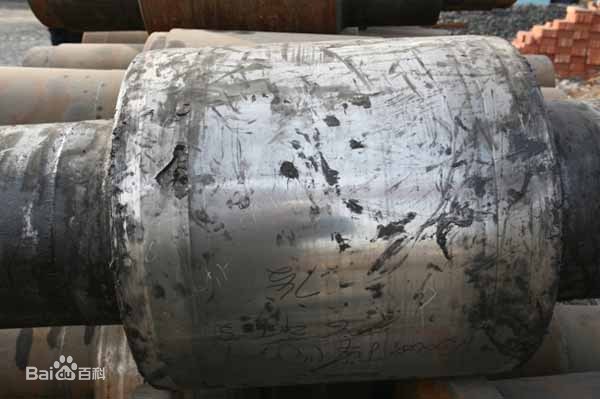
The pollution wear process is often not caused by one wear mode, but by the coexistence of several wear modes, which complement and promote each other. For example, all four wear modes mentioned above can be reflected simultaneously in the wear process of the slide valve core, and cutting wear and fatigue wear can promote adhesive wear.
Prev : The 8th China UK International Particle Technology Forum (PTF8) was grandly opened in Dali, an industry eventNext : The hazards of particulate pollutants: sedimentation and stagnation
文章推荐
友情链接:
Tianjin Honghe Technology Co., Ltd
E-mail:sales01@tjhonghe.com
I would like to call the information hotline:
Tel 022-58956940
Add: 5F, Block C-D, Building 3, No.13 Ziyuan Road, Huayuan Industrial Park, Tianjin
Scan QR code Follow us:

Copyright ©2022 Tianjin Honghe Technology Co., LTD.All Rights Reserved ICP record No. 19008642 -1
\©2022 Tianjin Honghe Technology Co., LTD. All Rights reserved
ICP备案号津ICP备19008642号-1
 客服1
客服1

