 English
 中文
中文


Analysis of the Working Principle of Liquid Particle Counter
Click:
Time:2021-07-02 00:00:00
When we want to choose a liquid particle counter, we often see the phrase "adopt XX working principle". Don't underestimate this "XX working principle". Knowing it can help us better understand the instrument, choose the instrument, and use it. At present, the commonly used liquid particle counters in the fluid pollution control industry are mainly divided into five working principles: light shielding, light scattering, resistance, filter clogging, and image analysis. Among them, the particle counter using the light shielding working principle is currently the most widely used in liquid particle pollution analysis.
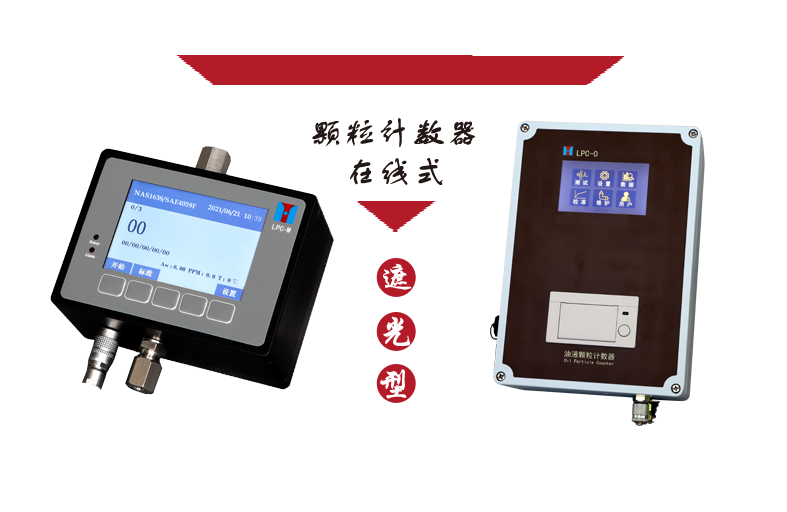
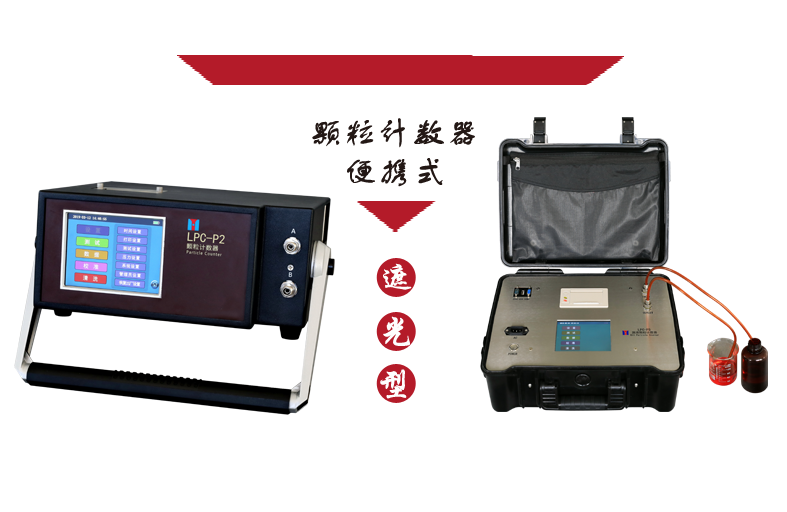
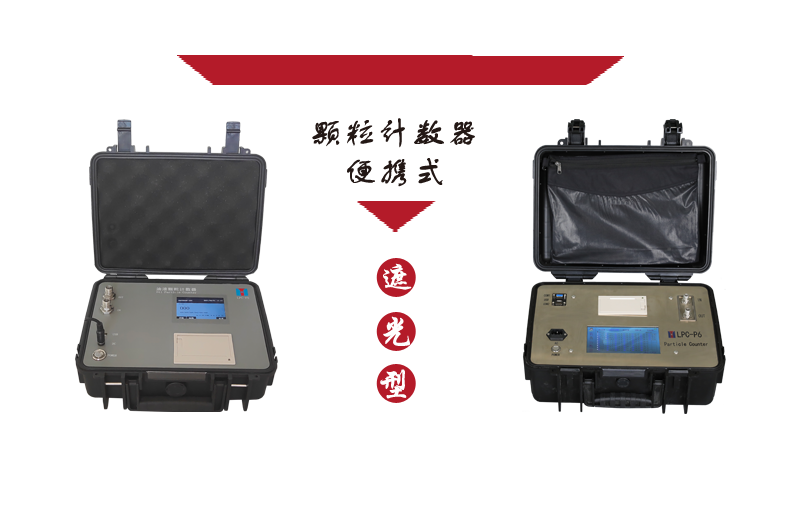
Light blocking type
When a liquid sample containing particles passes through the light beam of the sensor, a portion of the light is blocked by the particles, causing a change in light intensity. The amount of blocked light is proportional to the size of the particles. Therefore, by measuring the intensity and frequency of the light blocked by the particles passing through the sensor, the size and quantity of the particles can be obtained. This type of instrument is a strict particle counter that can count and record solid particles in a liquid sample one by one. This type of instrument has a very high measurement accuracy for particles ranging from 1 to 100 μ m, which corresponds precisely to the particle size range of the pollution level; In addition, it can quickly obtain results within a few minutes by measuring a small amount of liquid sample, with fast measurement speed and low requirements for particle concentration. Only one millionth of the liquid sample can be detected, making it the most widely used in liquid particle pollution analysis.
Light scattering type
When a beam of light is directed towards particles suspended in a liquid, a portion of the light is absorbed while another portion is scattered. By measuring the variation of scattered light intensity with scattering angle, the size and distribution of the particles can be determined. The light beam that is not reflected or scattered is blocked and absorbed by the aperture. When there are no particles in the liquid, the light beam is completely blocked and absorbed by the aperture. Instruments that use this working principle can only analyze the total amount and determine the percentage of particles of various sizes, and cannot count the particles in the tested liquid sample one by one.
The biggest advantage of this principle is its low measurement limit, which can reach 0.1 μ m. At the same time, due to the limited number of detectors installed, its detection upper limit is generally low, only 25 μ m, and the measurement range is narrow. If the measurement range is expanded, the number of detectors must be increased, so instruments with a large detection range are bulky and structurally complex. This type of instrument is commonly used in industries such as electronics, pharmaceuticals, and air purification for high-purity water cleaning and control, as well as for testing the cleanliness of clean room air.
Resistance type
When particles suspended in a conductive liquid pass through a small hole tube of known size, replacing the same volume of conductive liquid, in a constant current designed circuit, the resistance between the inner and outer electrodes of the small hole tube changes instantaneously, generating voltage pulses. Therefore, the size and quantity of particles can be obtained by detecting the size and frequency of the pulse signal.
This principle obtains the particle size distribution by measuring and counting each particle one by one, which is an absolute measurement method with very high measurement accuracy and resolution. It is particularly suitable for standard particles with narrow particle size distribution or applications with low concentration. Due to the requirement that the liquid being detected by this type of instrument is a conductive liquid, it is still difficult to detect mineral type oils. Therefore, it is less commonly used in fluid pollution control and oil pollution analysis. It is mainly used in industries and fields such as medicine and powder processing for detecting water-based liquids.
Filter blockage type
When the tested liquid sample passes through the filter screen, the particles in the liquid sample are intercepted by the filter screen, causing the filter screen to gradually clog. If the pressure difference between the two ends of the filter is constant, the flow through the filter gradually decreases as the filter becomes clogged; If the flow rate through the filter is constant, the pressure difference at both ends of the filter gradually increases, and the change in flow rate or pressure difference is related to the degree of contamination of the liquid sample. Therefore, by detecting parameters related to flow rate or pressure difference, the particle contamination level of the liquid sample can be semi quantitatively determined.
This type of instrument is not a strict particle counter and cannot accurately count particles. It can only estimate the particle size distribution of the tested liquid sample by comparing the detected parameters with the standard particle size used for calibration.
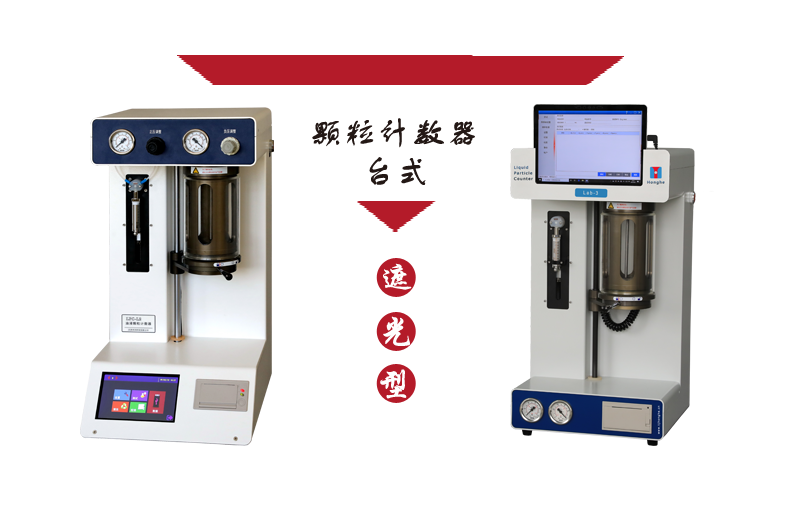
Image analysis type
Digital CCD fast imaging technology is often used to capture images of the measured liquid passing through narrow channels, and then software is used to automatically identify and calculate the particle size distribution. The essence of its measurement principle is the optical microscope counting method. Due to the fact that this type of instrument requires taking photos of particles before counting them, it is not possible to count each passing particle one by one, which can easily result in repeated or missed counts and slightly lower measurement repeatability. In addition, due to the particles in the photo being in a flowing state and limited by the reaction speed of the photoelectric device, measurement errors are easily caused by particle tailing.
文章推荐
友情链接:
Tianjin Honghe Technology Co., Ltd
E-mail:sales01@tjhonghe.com
I would like to call the information hotline:
Tel 022-58956940
Add: 5F, Block C-D, Building 3, No.13 Ziyuan Road, Huayuan Industrial Park, Tianjin
Scan QR code Follow us:

Copyright ©2022 Tianjin Honghe Technology Co., LTD.All Rights Reserved ICP record No. 19008642 -1
\©2022 Tianjin Honghe Technology Co., LTD. All Rights reserved
ICP备案号津ICP备19008642号-1
 客服1
客服1

